WHICH AIRLINE IS THE BEST TO FLY FROM NEW YORK TO LONDON?
There are many options to fly when regarding to a trip from New York to London from the all-widebody flights of Virgin Atlantic to the all-narrowbody flights of JetBlue. From the luxury of JFK airport: where most flights depart from, to EWR airport: where United Airlines bases its operations; there are indeed many ways to fly across the pond when it comes to these cities.
for luxury: Virgin Atlantic
Virgin Atlantic easily wins when it comes to luxury due to operating next-gen Airbus A330neos and extremely comfortable Airbus A350-1000s. The Airbus A330neos have enclosed suites and bluetooth pairing capabilities. The Airbus A350-1000s on the other hand, has world-class mood lighting and premium features at every seats. Compare that to competitors, like American Airlines, which their 777-300ers are more than a decade old, Delta, who still flies 30+ year old 767-300ers, and United which also flies 30+ year old 767-300ers. British Airways is also great with their new Club Suite, however, it lacks privacy compared to the Virgin Atlantic planes. Finally, JetBlue has their Mint Suite, however it is operated by a narrowbody, and Norse Atlantic is low-cost.
For budget: norse atlantic
Norse Atlantic Airlines is extremely budget-friendly as it is a low-cost long-haul airline, with fares between JFK and LGW sometimes reaching as low as 398 round-trip. In 2nd place is Virgin Atlantic, with fares going below 600 round-trip quite often. Tied there, JetBlue offers a great albeit narrowbody experience for about 600 round-trip. Delta Air Lines loses due to its exceptionally high fares. Meanwhile, American Airlines and United Airlines are in the middle with about 850 round-trip fares.
For product consistency: JetBlue
JetBlue Airways wins here due to the fact that you are guaranteed to get the Airbus A321lr with world-class mint on all planes. American Airlines is 2nd due to using the 777-300er extensively. United Airlines is 3rd due to having their Polaris Business class on all planes flying between EWR and LHR. Delta Air Lines loses due to their Boeing 767-400er and 767-300er Delta One cabins being worlds apart.
why the a330neo ,a350, and 787 are not competitors!
The Airbus A330neo, A350, and the Boeing 787 are all next—generation fuel efficiant aircraft designed for the future of flying. However, they are not competitors.
so what is the role of these aircraft?
First: The Boeing 787. The 787 was made as a replacement of the 767 and it was made to usher the world into new, point-to-point long-haul routes.The 787’s incredible range meant that it could fly routes like New York, USA to Fuzhou, China and London, UK to Perth, AU. Second: The Airbus A350 was meant to be the next-gen aircraft replacing Airbus A340 and Boeing 777s on routes like New York, USA to London, UK and San Francisco, USA to Paris, FR. The Airbus A330neo was meant to replace the Airbus A330-200 and Airbus A330-300 on routes like Boston, USA to London, UK and Paris, FR to Beirut, LB.
NOTICE HOW THE BLOCK TIMES ARE DIFFERENT
It is noticable that the block times of Boeing 787/ Airbus A350 routes and Airbus A330neo routes are very different. The Airbus A330neo is designed for mid-range routes whereas the Boeing 787 and Airbus A350 are designed for ultra-long-haul routes. The Airbus A330-900neo has a range of 8,357 mi, wheras the 787-9 has a range of 9,551 mi and the A350-1000 has a range of 10,357 mi.
How the demand is different
The demand of the Boeing 787 is for long and thin routes. The Airbus A350 is the new flagship aircraft for airlines around the world. A prime example is Virgin Atlantic, which deploys the a350 on flagship routes to LAX and SFO wheras they deploy the 787-9 on secondary routes to Phuket and Cancun. The A350 also has their signature Loft and is the main testbed for new technologies such as Starlink WiFi. The A330neo is deployed on shorter routes to Boston and New York. So what do you think about the A330neo, A350, and Boeing 787 not being competitors? Or do you think they are competitors?
“AIRLINE ROUTES” BLOG ONE: VIRGIN ATLANTIC
It All Begins Here
Virgin Atlantic: The airline ranked for “best premium economy in the world” on Skytrax. They have 2 hubs: one at London Heathrow, UK and another in Manchester, UK. However, where exactly do they use their fleet, and where do they even fly?
GOOD ‘OL AMERICA
By far, this is Virgin Atlantic’s primary market. With flights to New York, Los Angeles, and even Tampa, The United States is a major market for the airline due to the massive demand of transatlantic travel. They mostly fly from Heathrow, although they fly from Manchester to Atlanta, New York, Las Vegas and Orlando. Here are their top destinations in the United States:
New York
Orlando
Los Angeles
Boston
Miami
where could they fly next in America
Due to slot constraints at London Heathrow, there is a chance Virgin Atlantic launches new flights from Manchester, specifically to Boston, Los Angeles and Miami. However, that does not mean that Virgin cannot use existing slots at Heathrow. They can fly from Heathrow to Raleigh-Durham and Southwest Florida due to expansion in US midsize markets.
the Carribean and canada
The second-largest market for Virgin Atlantic is the Carribean. They fly there mostly due to high tourism levels and cruise tourism and flights are from London Heathrow though there is a flight from Manchester to Bridgetown, Barbados. Destinations include:
Bridgetown, Barbados
Montenegro Bay, Jamaica
St. Johns, Antigua and Barbuda
St. George, Grenada
Kingstown, St. Vincent and the Grenadines
Virgin Atlantic also flies to Toronto, Canada. In the future, they can restart flights to Nassau, Bahamas and Vancouver, Canada. Also, they could launch new flights to Montreal, Canada.
Asia/AFRICA
Virgin’s other major markets are Asian and African. In Asia, they mostly fly to India. In India, they fly to New Delhi, Mumbai, and Bengaluru. In South Korea, they fly to Seoul, in Thailand to Phuket (starting October 2026), in The Maldives seasonally to Male, and in the United Arab Emirates seasonally to Dubai. In Africa, they fly to Lagos in Nigeria, and Johannesburg and Cape Town in South Africa. In the future, Virgin Atlantic can fly to Jeddah, Saudi Arabia; Beijing, China and Tokyo, Japan. In addition, they can launch flights from Manchester to New Delhi and Mumbai.
ConclusioN
Virgin Atlantic serves these destinations because it fits their historic lesiure-based business model and even their new busines-based focus. It also shows the constraints of operating an all-widebody fleet. In the future, they can fly to Perth, Australia and Sao Paulo, Brazil due to increased demand and previous attempts to fly to South America and Australia.
The curious case of widebody domestic flights
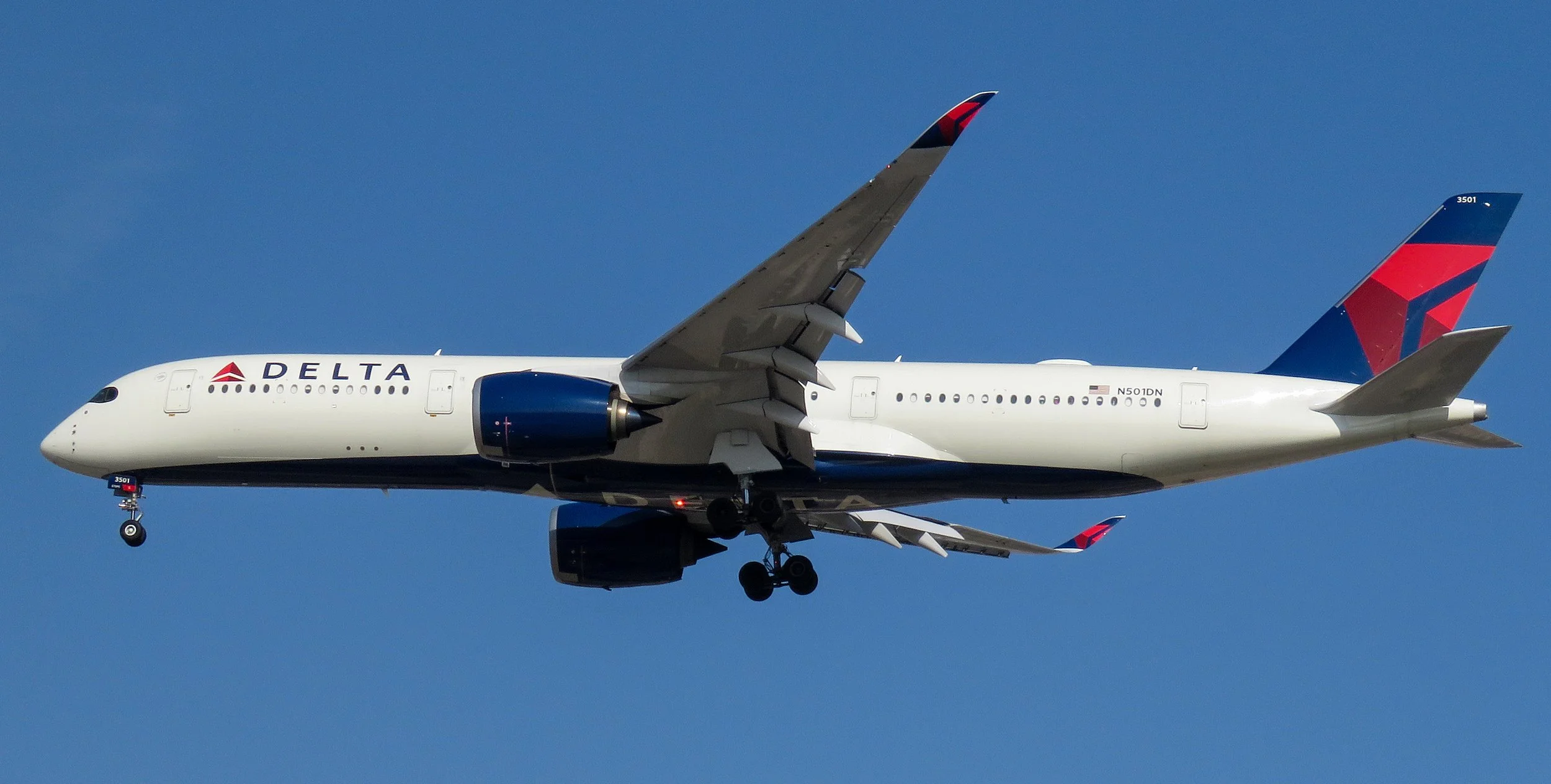
Imagine this scenario: You are living in Minneapolis, Minnesota, and you work in investment banking, and you have a conference to attend in Detroit, Michigan regarding equity trends, and you are booked on a normal 1 hour flight on Delta Airlines. You reach the Minneapolis-St. Paul International Airport, and go through security like any other traveller. However, when you get to your gate, you notice that the plane you see is an A350 - much larger than what you expected, and when you step on the plane, you notice lie-flat seats and enormous cabins built for 15+ hour flights to cross the Pacific Ocean - not Lake Michigan, and you think you have stepped on the wrong plane. Welcome to the reality of many domestic flights in the world: widebody equipment used for shorter routes. But to understand why some flights have large widebodies, whereas most have flights with smaller single-aisle jets, we have to understand this: where do they even fly domestically?
Where ON EARTH do widebodies fly domestically!?
Delta Airlines, as previously mentioned, is an operator of widebody domestic flights. In fact, it is one of the primary operators of widebody domestic flights around the world, utilizing planes such as the Airbus A330, Airbus A350 and the Boeing 767. They almost always use these planes between hubs, such as Atlanta to Detroit, Los Angeles, Minneapolis, New York-JFK and Salt Lake City. They also fly from their hub in Minneapolis to Detroit (our example) and Salt Lake City. There are exceptions, however, such as Atlanta to Tampa and Miami on a 767, both of which are not Delta hubs (but we will get to the reason later).
Other airlines include Air India, which flies between Amritsar, Ahmedabad, New Delhi, Mumbai, Bengaluru, and Hyderabad on widebodies such as the Boeing 787 all the time to shuffle widebodies for international routes. Aeroflot (Russian flag carrier) uses Airbus A330s and Boeing 777s to fly across the nation of Russia, and also flies widebodies between hubs Moscow and St. Petersburg. Meanwhile, in Australia, Qantas flies from their hub in Perth to Adelaide, Brisbane, Melbourne and Sydney using Airbus A330s and Boeing 787s, which are all also important bases for Qantas.
THE SUNSHINE STATE
As we have previously stated, widebody domestic flights are mostly hub-to-hub flights or shuffling for long haul routes. However, there are two places in the United States. One of those places has only 1 hub for a major U.S. airlines (Miami for American), but all 3 deploy widebodies there. That place - is Florida. Florida serves as a major tourist destination during its peak (November 26 - April 2), in which many tourists come visit- and by many - it is a lot. 31,500,000 Americans visited Florida in the month of December 2025 alone - including me (that’s not the focus but anyway). This means that a lot of people need a lot of flights. However, what happens when Tampa, Orlando, Miami, Fort Lauderdale, even Southwest Florida airports are full - WIDEBODIES! Widebodies save the day when it comes to the Sunshine State because they can move a lot of tourists while keeping slots open in the airports due to each plane taking up 1 space. For example, American flies from Charlotte, Los Angeles, Pheonix and Phillidelphia to Miami on Boeing 777s and Boeing 787s because it is a hub, but rival carrier United, with no hub in Florida flies from Chicago, Newark and San Francisco to Orlando on Boeing 777s, and Orlando is not a United hub. Delta Airlines flies from Atlanta to Tampa, Orlando, Fort Lauderdale and Miami on Boeing 767s as these planes can support increased demand. Yes, Delta flies to their rival carrier American’s hub in Miami with widebodies, and still are profitable. This is the effect of tourism-based widebody routes. Another example of a tourist destination is Las Vegas, where during the peak winter season, United flies from Washington D.C. using Boeing 777s, American flies from Philliadelphia, Miami, and New York using Boeing 777s and Boeing 787s, and Delta uses Boeing 767s and Airbus A330s from Atlanta.
So Why?
It boils down to three resons or a combination of the three:
Hub-to-hub transfer of long-haul widebodies (Delta Airlines Minneapolis-Detroit)
Hub-to-secondary airport transfer meant for long-haul flights (Air India Delhi-Amritsar)
Hub-to-tourist destination meant for increased tourist capacity (United Airlines Newark to Orlando).
Widebody domestic flights will always be vital to the world of aviation, with complex hubs and destinations to cater a traveller’s needs or wants.
airline safety in the united states
Recent reports have shed light on some near-misses across the United States, especially those involving near-collisions and runway incidents. Additionally, Boeing has faced considerable scrutiny over the past decade, raising widespread concerns about its safety management systems.
Aviation Safety Improvement
Back in the 1980s, the fatal accident rate was about 0.5 per million flights. By the 2010s, this number had dropped to 0.15 per million flights—showing impressive progress in aviation safety. Currently, the risk of fatality is estimated at 0.09, meaning you'd need to fly every day for about 535 years to experience an accident with at least one fatality. Interestingly, 2017 was recorded as the safest year in aviation history, with zero passenger jet fatalities. Such an achievement would have been hard to imagine back in the 1980s, especially considering the tragedies in 1985 involving Air India Flight 182 and Japan Airlines Flight 123, which together caused 833 fatalities—all on Boeing 747 jumbo jets.
Evolution of Airport Security: 1958, 1991, and 2026
In 1958, there were no metal detectors or X-ray scanners, so travelers could access the terminal and head straight to the gate without screening.
By 1991, in response to hijacking incidents in the 70s and 80s, metal detectors and baggage screening were introduced. The technology then was quite basic compared to today, and it predated the September 11, 2001 attacks.
Fast forward to 2026, airport security in the U.S. now uses advanced digital identification methods, with single biometric tokens serving as identification, like the star on passports for Real ID. These measures came after the September 11 attacks and the attempted bombing of American Airlines Flight 63 from Paris to Miami in December 2001. Thanks to technological progress, security procedures have become simpler and more effective.
Changes in Cockpit Safety Practices: 1958, 1991, and 2026
Back in 1958, during the early jet era, safety largely depended on the teamwork of a three-person crew—pilot, first officer, and flight engineer. These roles set the foundation for modern aviation safety.
By 1991, new technologies such as digital glass cockpits and fly-by-wire systems—popularized by aircraft such as the Airbus A320, introduced in 1988—had streamlined automation, often reducing the crew to two pilots.
In 2026, cockpit security in the U.S. includes double-door systems designed to prevent unauthorized access following the 2001 hijacking incidents. Around the world, strict single-door security is in place to make hijacking attempts even harder.
Current Challenges
Today, the aviation industry still faces challenges. One major issue is the understaffing of air traffic control personnel due to government budget cuts since early 2025. For instance, American Airlines Flight 5342, traveling from Wichita to Washington, D.C., collided with a helicopter during approach, resulting in 67 fatalities. Investigations pointed to severe understaffing at Reagan National Airport.
Another concern is maintenance issues. The crash of Air India Flight 171 from Ahmedabad to London Gatwick—causing 241 onboard deaths and 19 on the ground—was the first fatal crash involving a Boeing 787 Dreamliner. It was found that fuel switches had been accidentally moved from the RUN position to CUTOFF. Later, similar problems contributed to the crash of Air India Flight 134 from London to Bangalore, highlighting ongoing maintenance concerns, all of which are worrisome given the current focus on profit over safety.
The accidents involving Boeing 737 Max planes—Lion Air Flight 610 in 2018 and Ethiopian Airlines Flight 302 in 2019—show how profit motives can sometimes compromise safety.
Conclusion
Overall, aviation has made remarkable safety gains thanks to improved security measures and cockpit technology. The industry has come a long way since the jet age began, with significantly lower accident rates and fewer incidents. Still, some challenges remain that need continuous attention to keep flying safely and reliably.